
Hot holding — keeping cooked food at a safe temperature prior to service — is one of the most common failure points in commercial kitchen compliance. It is also one of the most straightforward to manage correctly, once the rules and the risks are clearly understood.
What Is Hot Holding?
Hot holding refers to the practice of keeping cooked food at a temperature sufficient to prevent bacterial growth after cooking and before service. Common hot hold equipment includes heated display cabinets, bain maries, hot cupboards, soup kettles, and heated gantries.
Hot holding is distinct from cooking. The food has already been cooked to a safe internal temperature. The hot hold stage is about maintaining safety during the period between cooking and the point of service.
What the Law Says: 63°C
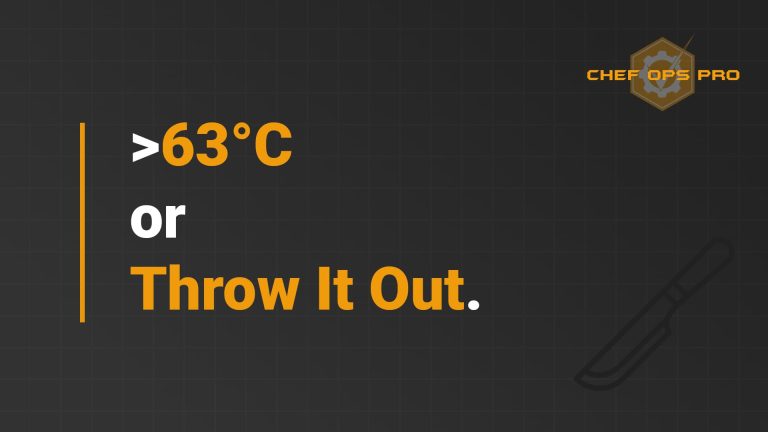
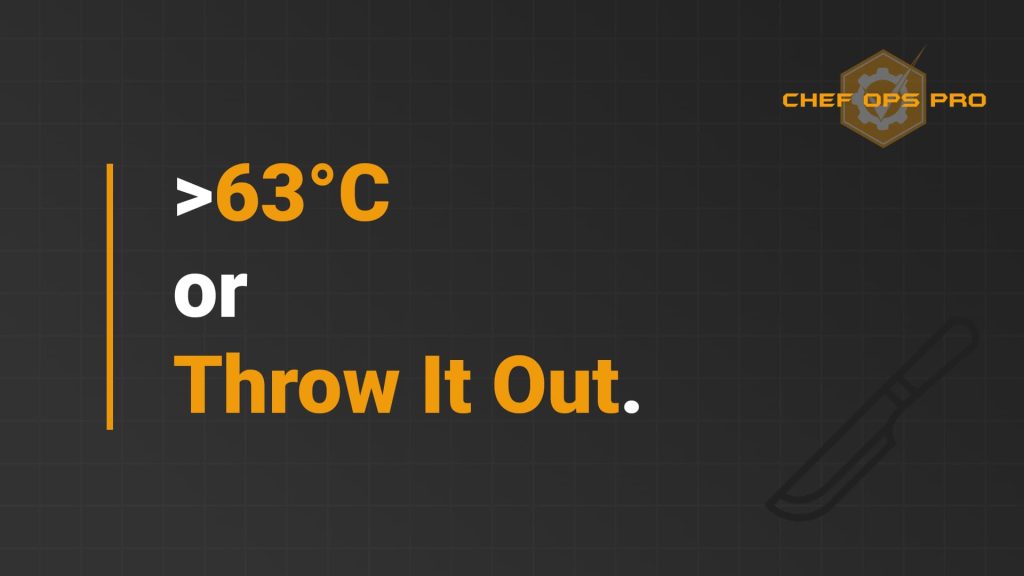
England. The Food Safety and Hygiene (England) Regulations 2013 (Schedule 4) require cooked or reheated food that is kept for service or on display for sale to be held at 63°C or above.
Wales and Northern Ireland. The same 63°C rule applies under the Food Hygiene (Wales) Regulations 2006 and the Food Hygiene Regulations (Northern Ireland) 2006.
Scotland. The Food Hygiene (Scotland) Regulations 2006 require hot food to be kept above 63°C. There is no two-hour allowance in Scotland.
The 63°C threshold is the point at which bacterial growth is inhibited. Below this temperature, food enters the danger zone (8°C to 63°C) where bacterial multiplication can occur rapidly.
The two-hour rule (England, Wales and Northern Ireland)
The law allows one exception. Food can fall below 63°C if it has been kept for service or on display for less than two hours, and it has not been kept for service or on display before. It is a legal defence, not a licence to hold food at any temperature, and it can only be used once.
In practice: serve the food within that window or throw it away. Do not put it back on the hot hold for a second run, and record what you did.
For what this looks like when it goes wrong on a busy night, read The Three-Hour Hot Hold Gap Nobody Planned For.
Why Hot Holding Frequently Goes Wrong
Under-powered or poorly maintained equipment. A bain marie or heated display cabinet that does not maintain 63°C reliably is a compliance risk every time it is used. Equipment should be checked before food is loaded and monitored during the holding period.
Overloading. Adding large volumes of food at once can temporarily drop the temperature of a hot hold unit below the safe threshold. Best practice is to add food in smaller quantities and allow the unit to recover temperature between additions.
Extended holding without monitoring. Food placed in a hot cupboard at the start of a lunch service and not checked again until the end of service may have been below temperature for hours. Without regular interval checks, there is no way to know — and no record of the temperature journey.
No disposal record. Food held too long or found below temperature should be discarded. The decision to discard — and the evidence that it was discarded — should be part of the record. Without this, an inspector cannot verify that food safety decisions are being made correctly.
No documentation. The most common hot holding compliance failure is simply the absence of records. Equipment checks, temperature readings during the holding period, time-in/time-out, and disposal decisions all need to be documented.
What a Hot Hold Record Should Include
For each hot hold session, your records should capture:
Unit identification — which piece of equipment is in use.
Start time — when food was loaded into the unit.
Starting temperature — the temperature of the food when loaded, confirming it was already cooked to a safe level.
Interval temperature checks — regular readings during the holding period, at intervals appropriate to the risk and your HACCP plan. For most operations, hourly checks are a reasonable minimum.
End time and disposition — when the holding session ended and what happened to the food (served, returned to kitchen for reheating, discarded).
Discards — any food removed and discarded should be recorded, with a note of the temperature and reason.
User attribution — who performed each check.
Reheating After a Temperature Drop
In England, Wales and Northern Ireland, the law does not set a reheating temperature. The FSA’s Safer Food, Better Business guidance gives safe time and temperature combinations, such as 75°C for at least 30 seconds or 70°C for at least 2 minutes. In Scotland, reheated food must reach at least 82°C by law.
Food that has already been out for service does not get a second two-hour allowance after reheating. If in doubt, throw it out.
This decision — to reheat rather than discard — should be documented in your food temperature records, including the core temperature achieved after reheating and the time of reheating.
Building Hot Hold Monitoring Into Your Operation
The most effective hot hold monitoring systems treat each hot hold session as a discrete event: a start, a series of interval checks, and a close-out with disposition recording.
Chef-Ops-Pro’s Hot Hold Monitoring module is built around this model. Each session is opened for a specific unit, with configurable minimum safe temperature, maximum hold time, and check interval settings. Interval readings are logged during the session. The system flags units that are approaching their maximum hold time or have recorded a temperature below the safe threshold. Sessions are closed with a disposal status record.
The result is a complete hot hold record for every session — timestamped, attributed, and ready for inspection — without requiring additional paperwork or administration from your team.
Sources: Food Safety and Hygiene (England) Regulations 2013, Schedule 4; Food Hygiene (Wales) Regulations 2006, Schedule 4; Food Hygiene Regulations (Northern Ireland) 2006, Schedule 4; Food Hygiene (Scotland) Regulations 2006; FSA Safer Food, Better Business: Prove it.