Kitchen Food Cost Tracking Software for UK Restaurants
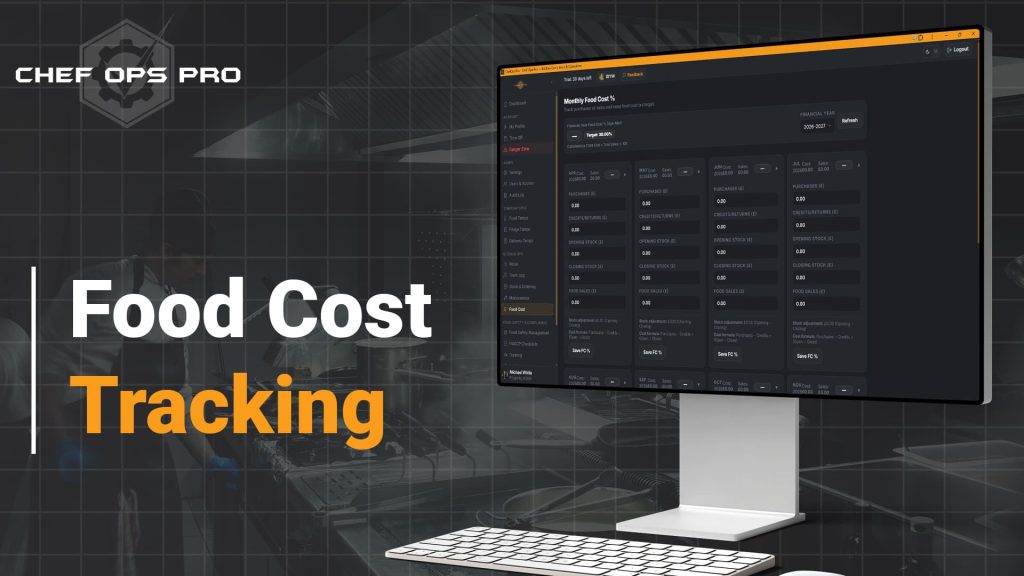
🍴 Know Your Numbers. Protect Your Margin.Kitchens that don't track food cost targets consistently are operating blind. Without a structured record of actual spend against target, food margins erode quietly — through waste, over-ordering, and portion drift — until the problem is impossible to ignore. Chef-Ops-Pro's Food Cost module gives you a clear monthly view of exactly where you stand.

The Problem
Food cost is the number that determines whether an independent food business is genuinely profitable or simply busy. Most kitchen operators have a target food cost percentage in their head — typically somewhere between 28% and 35% depending on the concept — but very few have a structured monthly record that shows whether they are actually hitting it. Without that record, margin erosion is invisible until it becomes a crisis. Waste creeps up. Portion sizes drift. Supplier prices increase quietly. Over-ordering becomes habitual. None of these problems announce themselves — they accumulate silently in the gap between what a kitchen thinks its food cost is and what it actually is.
Spreadsheets help, but only if someone maintains them consistently, which under the pressure of running a kitchen rarely happens. Chef-Ops-Pro’s Food Cost Tracking module gives independent UK food businesses a structured, property-specific monthly record of actual spend against target — building a rolling annual performance picture that makes margin erosion visible the moment it begins, supports management reviews with clean exportable data, and gives owners and kitchen managers a shared, objective language around cost control that removes the guesswork from one of the most important numbers in the business.
Who This is For
Module compliance & Record Keeping

The financial performance record that supports sound business decisions
While food cost tracking is not a regulatory compliance requirement in the way that temperature logs or HACCP records are, the discipline of maintaining a structured monthly record has a direct impact on business survival. The Restaurant Association estimates that uncontrolled food cost is one of the primary contributors to the failure of independent food businesses in the UK within their first three years.§ A documented month-by-month record of actual versus target food cost percentage provides the evidence base for menu pricing reviews, supplier contract negotiations, portion control decisions, and operational budget planning — turning what is usually an instinctive and inconsistent process into a structured, data-driven one. Chef-Ops-Pro's Food Cost Tracking module ensures that record exists, is maintained consistently, and is available to the right people at the right time.
What you can do with this module
Record monthly food cost figures
against your target percentage, building a rolling performance record across the year
Set property-specific food cost targets
that reflect your actual menu, business model, and revenue profile
View annual food cost performance
in a year-at-a-glance board, spotting seasonal trends and problem months at a single glance
Track variance
between actual and target cost percentages month by month, so underperformance is visible the moment it appears
Support management reviews
with a clean, exportable record of financial performance that doesn’t require digging through spreadsheets
Align kitchen performance
with business expectations, giving operators and owners a shared language around cost control
Build year-on-year benchmarks
that inform menu pricing decisions, supplier negotiations, and operational budgets
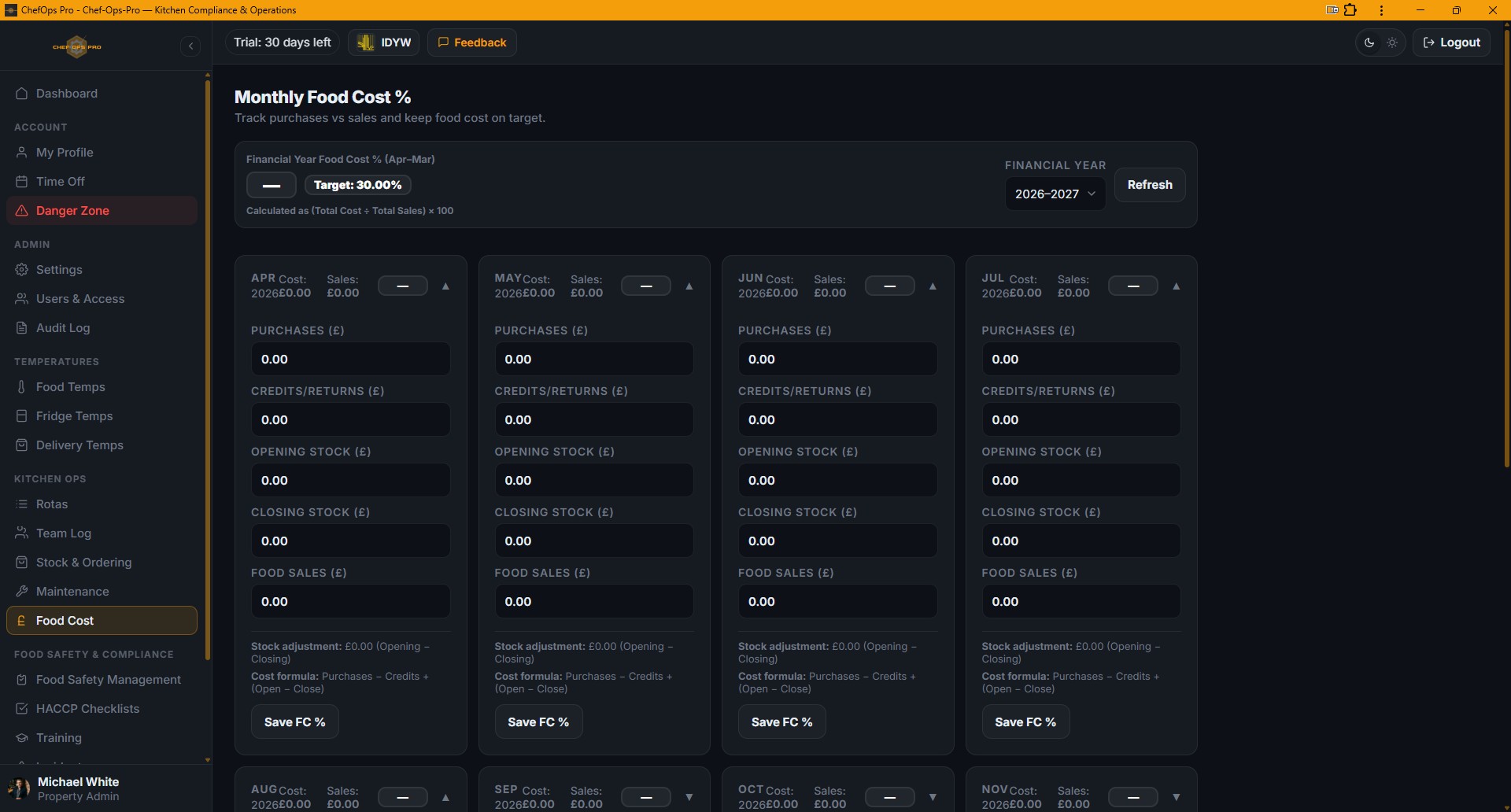
Targets are set per property, allowing each site to define a food cost percentage that reflects its own menu, revenue profile, and business model. Multi-site operators can set different targets for different concepts without one property’s performance skewing another’s.
The annual board displays each month’s actual food cost percentage alongside its target, making seasonal trends, problem months, and periods of consistent underperformance immediately visible without needing to calculate variances manually or build a separate report.
Variance tracking makes underperformance visible at the earliest possible point — the moment a month closes over target — rather than at the end of a quarter when the damage is already done. Early visibility means corrective action, whether that is a portion audit, a supplier review, or a menu price adjustment, can be taken before the problem compounds.
Yes. Because records accumulate month by month across the lifetime of the account, year-on-year comparisons become available naturally over time — providing the benchmark data needed to inform annual menu pricing decisions, supplier negotiations, and operational budget setting.
Yes. Property-specific targets mean each site or concept can be tracked independently, reflecting the different margin profiles of, for example, a café operation versus a restaurant or a catering division within the same group.
You Need Answers !
To make an educated decision, you have Questions that need answers
We will try to do that but incase we dont please contact us