
How building food safety into your kitchen’s daily workflow — not just its paperwork — is what actually keeps you inspection-ready.
Most kitchens don’t fail an EHO inspection because nobody knows the rules. They fail because knowing the rules and doing them every single day, under service pressure, without being reminded, are two very different things.
Food safety compliance isn’t a paperwork problem. It’s a habit-formation problem wearing a paperwork costume.
The Paperwork Trap in Kitchen Compliance
Ask any chef what “compliance” means to them and you’ll usually get a sigh, followed by some version of: forms, folders, and a clipboard nobody can find.
That’s the wrong mental model — and it’s the one the industry has been sold for decades. Compliance frameworks built around end-of-week paperwork treat food safety as a documentation exercise. Fill in the form, file it, move on. The problem is that documentation is a record of a behavior, not the behavior itself. A perfectly filled-in temperature log completed retrospectively at 4pm proves nothing except that someone can remember numbers, or invent plausible ones.
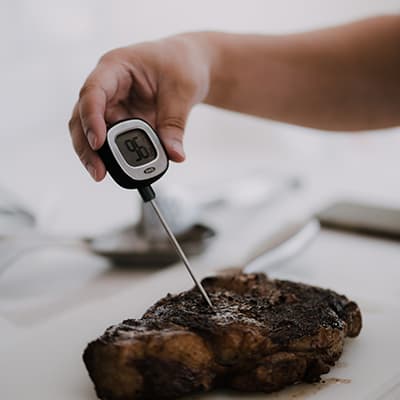
Real compliance — the kind that actually prevents someone getting sick — happens in the moment. The fridge gets checked at 8am because checking it is just what happens at 8am, not because a form needs a number in a box.
Why Habits Beat Rules for Food Safety
Behavioral science has a simple explanation for why “just follow the procedure” doesn’t work under kitchen conditions: willpower and memory are the most unreliable compliance tools available, and kitchens are engineered to deplete both. Service rushes, short-staffed shifts, a delivery arriving at the worst possible moment — none of that leaves headspace for someone to decide to run a temperature check.
Habits don’t need headspace. A habit is a behavior triggered automatically by a cue in the environment, not a decision made fresh every time. That’s the difference between kitchens that run tight, calm compliance with almost no friction, and kitchens in permanent catch-up mode before every inspection.
The formula is old but reliable: cue → routine → reward, repeated until the routine stops needing conscious thought.
- Cue: the fridge door, the start of shift, the delivery bell
- Routine: log the temperature, check the seal, sign for the delivery
- Reward: a green tick, a closed task, one less thing to think about
Do that enough times and the behavior stops being “compliance work” and becomes just how the kitchen runs.
Good Habits Form Fast. Bad Ones Take Far Longer to Undo.
Here’s the part most compliance advice skips: habit formation isn’t symmetrical.
A good habit — checking the probe, logging the temp, signing off the delivery — can lock in within days if the cue is consistent and the friction is low. But a bad habit forms just as easily, and it’s far more stubborn to remove. “Log it at the end of shift instead of in the moment.” “Skip the check when it’s slammed, catch up later.” “Estimate the number, it was probably fine.” These shortcuts take root just as fast as good ones do — and once they’re the default, they don’t just need correcting, they need actively unlearning, usually under the exact same time pressure that created them in the first place.
This is why compliance so often collapses in a specific, predictable pattern: a short-staffed month, a new hire who wasn’t shown the real routine, a manager on leave — and within a couple of weeks the shortcut has become “how we do it here.” By the time anyone notices, it’s not a one-off lapse to fix, it’s a habit to dismantle, and that takes weeks or months of deliberate re-cueing to reverse, not a reminder in a team meeting.
The practical implication: protecting a good compliance habit is cheaper than rebuilding one. Every shift where the cue is missed and nothing catches it is a small step toward the shortcut becoming normal. The moment to intervene is the first missed check, not the pattern of missed checks three months later.
5 Ways to Build Compliance Habits Into a Daily Kitchen Workflow
1. Put the Check Inside the Shift, Not Outside It
If checking a task means stepping away from the pass to find a folder in an office, the habit never forms — the friction is too high, too often, and gets skipped the first busy Friday. The check needs to happen at the point of work, on the device already in someone’s hand or on the wall right next to the unit.
2. Make the Cue Unavoidable, Not Optional
“Remember to log your AM temps” relies on memory. A missed-check alert, a red flag on a dashboard, a shift that visibly won’t close out until the task is done — that’s an environmental cue, and environmental cues don’t rely on anyone remembering anything. It’s also what catches the shortcut on day one, before it has a chance to become the new normal.
3. Give Immediate Feedback
Habits are reinforced by fast feedback loops. If a fridge is drifting out of range, the team needs to know now, not when the compliance report gets pulled together for next month’s audit. Immediate feedback also turns a temperature logging from a defensive paperwork exercise into an early-warning system — catching the faulty unit before it becomes a stock write-off, not after.
4. Remove Friction From Every Step
Every extra tap, every extra screen, every “let me go find the clipboard” is a tax on the habit forming — and every bit of friction is also an invitation to shortcut it. The fewer steps between noticing the cue and completing the routine, the more reliably the good version sticks instead of the fast, sloppy one.
5. Design for Staff Turnover
A habit that lives in one experienced chef’s head disappears the day they leave — and so does their standard, replaced by whatever the next person defaults to. A habit embedded in the daily workflow — the same prompts, the same order, the same expectations, regardless of who’s on shift — survives turnover, which in hospitality is not a hypothetical.
The EHO Inspection Is a Symptom, Not the Goal
An EHO inspection isn’t the moment compliance gets built — it’s the moment it gets revealed. A kitchen that’s spent months protecting the habit walks into inspection day with nothing to prepare, because there was never a gap between “how we normally run” and “how we run when someone’s watching.”
A kitchen that’s let the shortcut take hold has a much harder problem: not a form to fill in before the visit, but weeks of re-teaching a routine that’s already become someone’s default.
That’s the real benchmark. Not “can we produce the paperwork if asked,” but “is the safe behavior already just what happens here, every day, whether anyone’s checking or not — and is anything letting the shortcut creep in unnoticed.”
Building the Workflow, Not Just the Record
This is exactly why the tools a kitchen uses matter as much as the training it gives. A system that only exists to store completed records after the fact reinforces the paperwork mindset — and gives the shortcut nowhere to be caught. A system built around the actual shift — flagging what’s due right now, making the check take seconds at the point of work, surfacing gaps immediately instead of at month-end — reinforces the good habit and catches the bad one before it sets in.
Chef-Ops-Pro was built around that distinction. Temperature logging, maintenance checks, HACCP checklists, and delivery records aren’t separate admin tasks bolted onto the day — they’re designed to sit inside the natural cues of a shift: the fridge door, the delivery bell, the start and end of service. The goal isn’t a better filing cabinet. It’s making the compliant behavior the path of least resistance, every single day, so the good habit stays the default and the shortcut never gets the chance to become one.
Want to see how Chef-Ops-Pro turns daily compliance into a habit instead of a chore? Take it for a spin for 60 days and get that habit forming