

Refrigeration Temperature Monitoring: What UK Law Requires
Temperature control is the foundation of food safety in any commercial kitchen. Keeping cold food cold and hot food hot is not a best practice recommendation — it is a legal requirement. And for cold storage specifically, the obligations around monitoring and recording are more detailed than many operators realise.
This guide covers what UK food safety law actually requires for refrigeration temperature monitoring, what that means in practice for a commercial kitchen, and how to build a monitoring system that keeps you compliant every day.
The Legal Framework
Refrigeration temperature control in UK food businesses is governed by:
- The Food Safety Act 1990 — the primary legislation establishing the duty to ensure food is safe to eat and not falsely presented
- Regulation (EC) No 852/2004 on the hygiene of foodstuffs — retained in UK law post-Brexit, this regulation requires food business operators to implement and maintain food safety management procedures based on HACCP principles
- The Food Hygiene (England) Regulations 2006 (and equivalent regulations in Scotland, Wales, and Northern Ireland) — which implement the EC regulation domestically
Under Regulation (EC) No 852/2004, Annex II, Chapter IX, food businesses must ensure that:
“Raw materials, ingredients, intermediate products and finished products likely to support the reproduction of pathogenic micro-organisms or the formation of toxins are not kept at temperatures that might result in a risk to health.”
For chilled food, this means maintaining temperatures that prevent bacterial growth. The UK’s Food Standards Agency guidance, supported by industry codes of practice, establishes the following benchmarks:
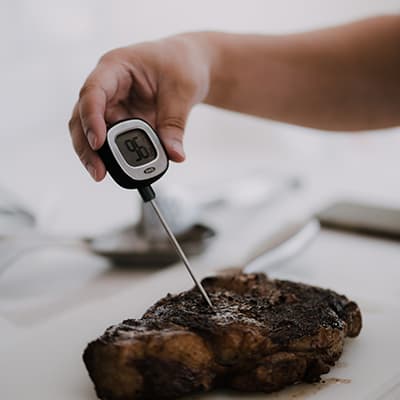
- Refrigerators: 0°C to 8°C (with 5°C or below recommended as a working target)
- Freezers: -18°C or below
The Monitoring Requirement
The law does not simply require that fridges and freezers operate at safe temperatures. It requires that food businesses can demonstrate they are doing so. This is where monitoring and recording come in.
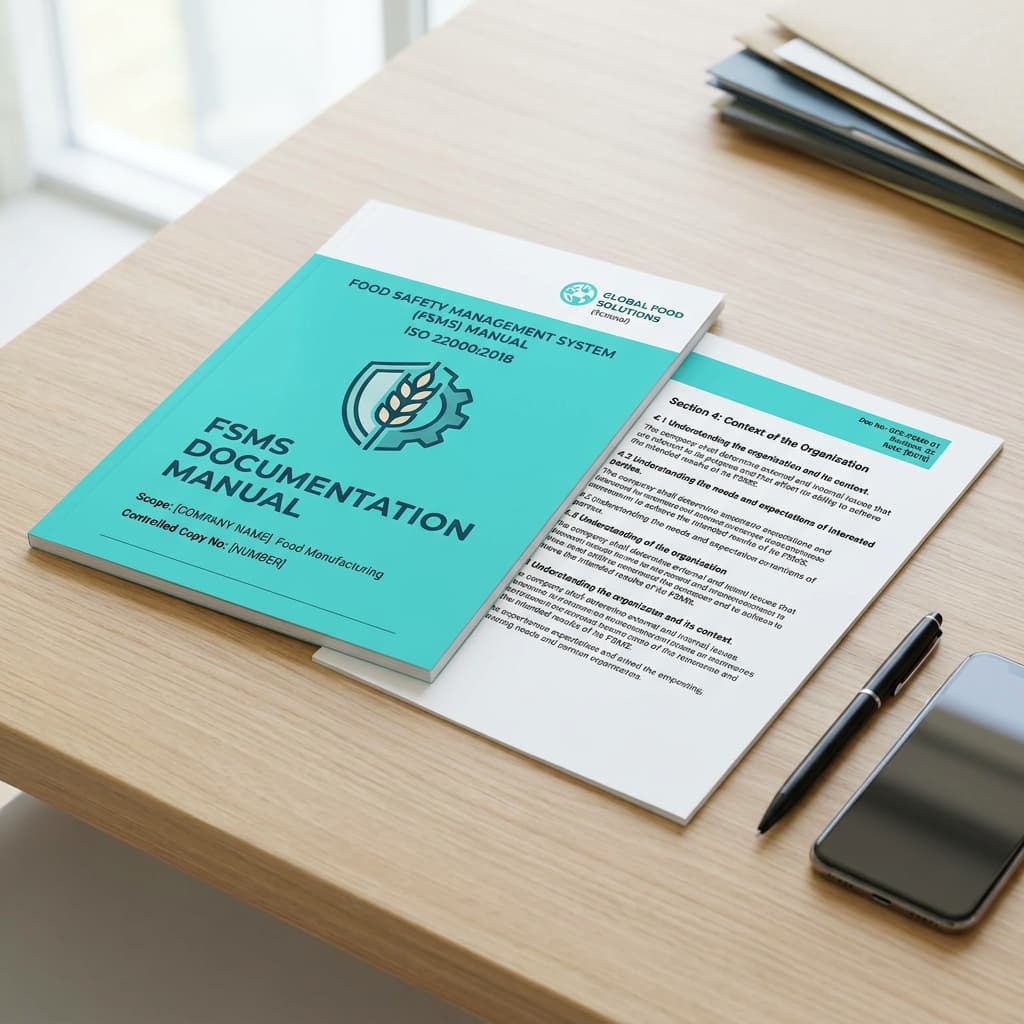
Your Food Safety Management System (FSMS) — the documented procedures your business follows — must include a mechanism for monitoring refrigeration temperatures and recording the results. This is a HACCP control point: a critical stage in your process where a hazard can be controlled, and where you must have evidence that control is being exercised.
In practice, this means:
- Regular temperature checks at defined intervals
- A record of each check, including the temperature measured, the time of the check, and who performed it
- A clear procedure for what to do when a temperature is out of range — and a record of the corrective action taken
There is no prescriptive requirement in law for how often checks must be performed, but industry guidance and EHO expectations in the UK typically centre on a minimum of twice daily — an AM check and a PM check — for refrigerated storage units used in daily food service.
What Inspectors Look For in Refrigeration Records
When an EHO assesses your refrigeration records, they are looking for several things:
Consistency. Are there checks for every day, or are there gaps? Gaps suggest monitoring is not embedded in the team’s routine.
Plausibility. Temperatures that are identical across multiple checks, multiple days, and multiple units are sometimes a sign that records are being fabricated rather than measured. Real refrigeration units fluctuate slightly.
Range awareness. Are any out-of-range readings recorded? A log that shows every single check within range across months of operation, with no corrective actions, can appear improbable in a busy kitchen environment.
Corrective actions. When a temperature is out of range, what happened? The corrective action record is as important as the temperature record itself.
User attribution. Who performed each check? This matters for verifying that qualified, trained staff are carrying out monitoring tasks.
Configuring Your Monitoring System
For a UK commercial kitchen, a robust refrigeration monitoring setup includes:
Defined check windows. Set specific AM and PM check periods for your kitchen. For example, AM checks between 07:00 and 10:00, PM checks between 14:00 and 17:00. Checks performed outside these windows may carry less weight if challenged.
Unit-level records. Each fridge and freezer should have its own log. A single combined “refrigeration log” covering multiple units ambiguously is harder to interpret and defend.
Safe temperature ranges. Your FSMS should document the safe range for each unit type. For fridges, this is typically 0°C to 8°C. For freezers, -18°C or below.
Corrective action procedures. Your team needs to know what to do when a temperature is outside the safe range: check the unit, check whether food is at risk, contact a manager, record the action taken and the outcome.
DEFROST tracking. Periodic defrost cycles are normal for many refrigeration units. These should be recorded so that elevated temperatures during a defrost are contextualised rather than flagged as unexplained out-of-range events.
Moving Beyond the Paper Fridge Log
The traditional paper fridge log is the minimum viable approach to refrigeration monitoring. It satisfies the recording requirement — but it provides no protection against missed checks, no automated alerting when temperatures are out of range, and no mechanism for ensuring corrective actions are documented.
Digital refrigeration monitoring systems change this. Temperature checks are logged in real time, timestamped and attributed automatically. Missed checks can trigger alerts to management before the end of the check window. Out-of-range readings can require a corrective action to be recorded before the entry is accepted.
Chef-Ops-Pro provides digital refrigeration monitoring for UK kitchens, with configurable AM and PM check windows, outlet-scoped unit management, DEFROST status recording, automated out-of-range email alerts, and a full audit trail that covers every requirement of a HACCP-based FSMS.
When an EHO asks to see your refrigeration records, the answer is a complete, timestamped, gap-free log — ready in seconds.