

Temperature logs. Rota planning. Maintenance faults. Staff training records. Procurement requests. EHO inspections. If you run a café, takeaway, school kitchen, canteen, or independent restaurant — you already know the weight of it.
For years, the answer has been to bolt together a collection of specialist tools — one for scheduling, one for food safety, one for checklists — or to buy a generic platform and spend weeks configuring it to fit your kitchen. The big operators could absorb both the cost and the setup time. For independent food businesses, it quietly became one of the most frustrating parts of running a kitchen.
This post breaks down the most commonly used kitchen management tools on the market, where each one genuinely excels, and why a growing number of independent operators are moving to a purpose-built all-in-one platform instead.
The Usual Suspects: What the Market Looks Like Right Now
Logit — Generic Workflow Digitisation

Logit is a modular workflow platform used across multiple industries. An admin designs forms and processes, staff complete them on mobile devices. Flexible enough to be adapted to almost any business — including food operations.
The problem is that flexibility is also its limitation. Logit doesn’t know what a blast chill is. It has no concept of corrective action thresholds, HACCP compliance structure, or what an EHO officer expects to see at inspection.
You can build something that approximates food safety compliance inside Logit — but you’re doing the compliance thinking yourself, shoehorning your kitchen into a generic form builder. A misconfigured form doesn’t just create admin overhead. It creates compliance gaps you won’t discover until inspection day.
Best for: businesses with a dedicated ops manager willing to invest significant time in configuration, operating across multiple non-food workflows.
Deputy — Rota and Scheduling

Deputy is one of the most polished workforce management platforms available. Shift planning, availability management, labour cost tracking, payroll integrations. If scheduling is your primary pain point and you have the budget, it does the job extremely well.
The catch: it does almost nothing else. You still need separate tools for food safety, checklists, maintenance, and training.
At £3–5 per user per month before add-ons, the cost adds up fast for a small team — and you’re still only solving one problem.
Best for: larger hospitality groups who need deep scheduling features and already have other compliance tools in place.
Checkit — Temperature Monitoring and Compliance

Checkit is genuinely impressive for automated temperature monitoring. Wireless sensor integration, real-time alerts, HACCP-ready audit trails. If you’re running a large kitchen with dozens of refrigeration units and need sensor-level automation, it’s hard to beat.
For an independent café with four fridges and a blast chiller? The pricing and implementation complexity are designed for enterprise — not for a two-person operation that needs to log temps before service.
Best for: large-scale food production or multi-site groups with budget for hardware sensor installation.
Trail — Digital Checklists and Ops
Trail gained a strong following in hospitality for replacing paper checklists with digital ones. Opening checks, closing checks, cleaning schedules — all logged, timestamped, and reportable. The interface is clean and staff adoption is generally good.
What it doesn’t do: rotas, temperature logging beyond manual entry, procurement, food cost tracking, or training records. It’s a strong checklist tool that stops short of full kitchen ops.
Best for: operators who want to digitise their paper-based compliance checklists and don’t need broader ops management.
Apicbase — Recipe Management and Food Cost

Apicbase is the most sophisticated food cost and procurement platform in this list. Recipe costing, menu engineering, supplier management, allergen tracking, nutritional analysis. For a fine dining group or contract caterer managing complex menus across multiple sites, it’s powerful.
For a school canteen tracking monthly food spend against budget, or a takeaway trying to understand margin — it’s significant overkill, and the pricing reflects that.
Best for: multi-site restaurant groups and contract caterers with complex menu management needs.
The Real Problem: Generic Tools and Fragmented Stacks
Independent food businesses tend to end up in one of two situations.
The Stack Problem
Multiple specialist tools that each do one thing well but don’t talk to each other. Deputy for rotas. Trail for checklists. A spreadsheet for temperature logs. Email for maintenance. A shared drive for training documents.
An EHO inspection arrives and your compliance evidence is split across three platforms and two spreadsheets.
The Generic Platform Trap
A tool like Logit that can technically cover all of these areas — but only if you’re willing to build your own food safety system inside it.
For a food business owner, that means doing the compliance configuration yourself, and hoping you’ve got it right.
Neither approach was built for the independent food business. One is too fragmented. The other puts the burden of compliance expertise on the operator.
What Purpose-Built Actually Means
Chef-Ops-Pro was built specifically for the independent food business — the restaurant with one site and twelve staff, the school kitchen feeding 400 pupils a day, the café group with three locations, the takeaway that’s still running procurement via WhatsApp.
Every module is designed around the real workflow — not a generic template you adapt yourself after purchase.
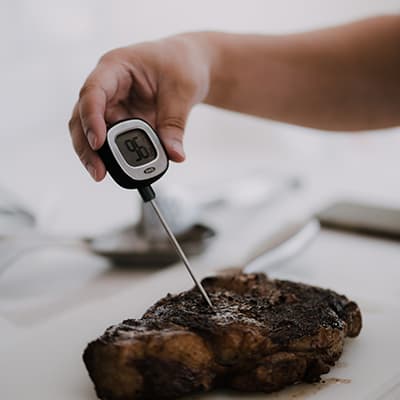
- Temperature logging — fridge checks, food probes, blast chill start/finish, hot hold monitoring, corrective action recording, probe calibration. Structured around HACCP requirements out of the box.
- Rotas — weekly scheduling, shift publishing, print-ready formats. Simple enough for a café manager, capable enough for a hotel kitchen.
- Checklists — build your own or start from food business presets. Staff complete on any device, admin sees real-time completion.
- Maintenance — log a fault with a photo, track it through to completion. No more WhatsApp messages that get lost.
- Training records — assign training to staff, track completion, flag expiries. Auditable and pull-up-ready for inspection.
- Food cost tracking — monthly input, annual view, target percentage. No configuration required.
- EHO compliance pack — one button generates a complete downloadable compliance document. Ready for inspection day.
- Procurement — staff submit requests, admin approves and marks as ordered or delivered. Replaces the notepad on the pass.
- Team handover log — AM and PM notes with read receipts. Replaces the handover book.
Who Chef-Ops-Pro Is Actually For
Restaurants & Hotel Kitchens
Full compliance suite, rotas, maintenance, and food cost in one dashboard. Covers the operational layer your POS doesn’t touch.
Cafés
Temperature logs, opening checklists, and simple scheduling. Up and running in an afternoon. Scales as you open additional sites.
Takeaways
Replace paper logs and WhatsApp procurement chains with a system that’s auditable and EHO-ready — no configuration work required.
School Kitchens & Canteens
HACCP-ready records, training tracking, and a one-click EHO compliance pack. Purpose-built, not adapted. You don’t need to be a food safety expert to set it up correctly — it already is.
Food Production & Canteen Kitchens
Checklists, temperature monitoring, team handovers, and maintenance logging built around a production workflow from the ground up.
The Honest Comparison
We won’t pretend Chef-Ops-Pro has the most powerful scheduling engine — Deputy has been building that for years. And if you need wireless sensor integration across dozens of refrigeration units, Checkit is ahead on that front.
But if you’re an independent food business that needs temperature logs, rotas, checklists, training records, and EHO-ready reporting — without paying for five separate subscriptions or configuring a generic platform to understand what a kitchen actually does — Chef-Ops-Pro is built for you.
One platform. One login. Purpose-built for food. Ready from day one.