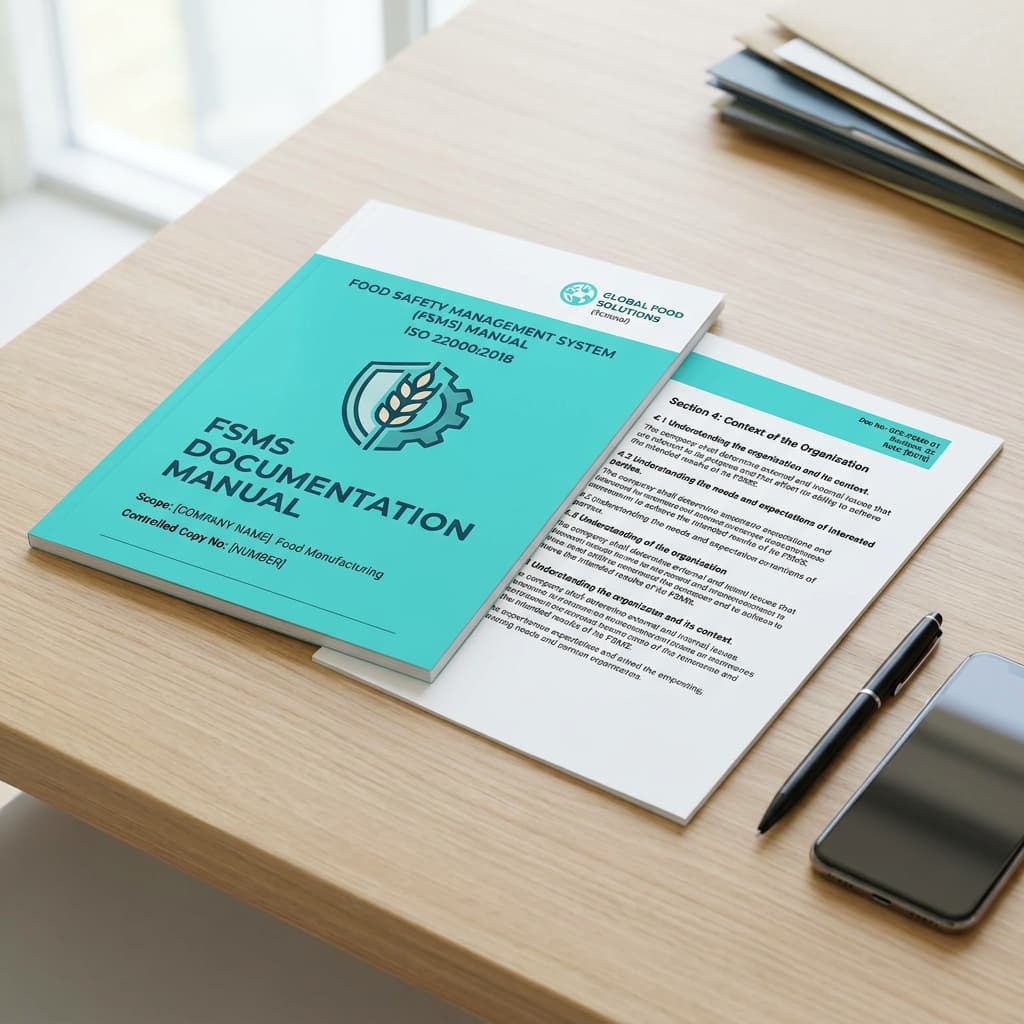


Every food business in the UK is legally required to have a Food Safety Management System (FSMS) based on HACCP principles. For most commercial kitchens, the question is not whether to have one — it is whether the system they have is fit for purpose, and whether it is being operated in a way that generates the evidence needed to survive an EHO inspection.
This guide covers what an FSMS must contain, what makes a digital FSMS superior to a paper-based one, and how to build one that works for your kitchen in practice.
What the Law Requires
Regulation (EC) No 852/2004 on the hygiene of foodstuffs — retained in UK law — requires food business operators to implement and maintain procedures based on the principles of HACCP: Hazard Analysis and Critical Control Points.
The seven HACCP principles are:
- Conduct a hazard analysis — identify what could go wrong
- Identify the Critical Control Points (CCPs) — the stages where hazards must be controlled
- Establish critical limits for each CCP — the measurable boundaries that define safe operation
- Establish monitoring procedures — how you will check that each CCP is under control
- Establish corrective actions — what to do when a CCP is not under control
- Establish verification procedures — how you confirm the system is working
- Establish documentation and record-keeping — the evidence that principles 1–6 are being applied
Principle 7 is where most kitchens have a gap. The hazard analysis exists. The critical control points are identified. The procedures are in place. But the records — the day-to-day evidence that the system is actually operating — are incomplete, inconsistent, or absent.
The Components of a Commercial Kitchen FSMS
For a typical UK commercial kitchen, a complete FSMS covers the following areas:
Refrigeration temperature monitoring. Daily checks of all cold storage units, with records of temperatures, check times, and who performed the check. Out-of-range readings must have a corrective action record.
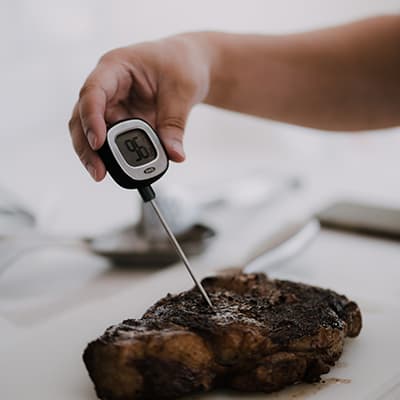
Food temperature logging. Temperatures at every critical stage: cooking, cooling, reheating, hot holding, cold holding. Each record should include the food item, the temperature, the time, the probe used, and the outcome.
Blast chill monitoring. If you use a blast chiller, each cycle requires a record of start and end temperatures and elapsed time, checked against your permitted chill parameters.
Hot hold monitoring. Each hot hold session requires a record of starting temperature, interval checks during the session, and disposition at close (served, discarded, reheated).
Cleaning and disinfection. Scheduled cleaning tasks, sign-off records, and evidence that cleaning is being carried out to the required frequency and standard.
Maintenance. Fault reports, action records, and completion sign-off. Equipment that is faulty and not repaired is both an operational and a compliance risk.
Supplier and delivery records. Temperature checks on deliveries, supplier documentation, and rejection records for non-conforming deliveries.
Staff training records. Evidence that every food handler has received appropriate food hygiene training, with timestamps and individual sign-off.
Pest control records. Evidence of contracted pest control visits and any findings.
HACCP documentation. The documented hazard analysis, process flow, CCPs, critical limits, and verification procedures — reviewed and updated when your menu or processes change.
Why Paper Systems Fall Short of HACCP Requirements
HACCP requires not just that records exist, but that they are:
- Current — up to date as of today
- Complete — no gaps in the monitoring record
- Accurate — reflecting what was actually measured, not estimated or backdated
- Attributable — clearly showing who performed each check
Paper systems struggle with all four of these requirements. Records are often completed retrospectively. Gaps occur when team members forget or are too busy. Handwriting is sometimes illegible. And there is no mechanism to verify that a paper entry was completed at the time claimed.
This matters because, in a HACCP assessment, the record is the evidence. An inspector cannot confirm that a fridge was checked at 08:00 unless the record says it was. If the record is missing, the check did not happen — regardless of what the team insists.
What a Digital FSMS Changes
A digital food safety management system removes the friction from record-keeping. Instead of requiring staff to find the right form, fill it in legibly, and file it correctly, a digital system puts the right record in front of the right person at the right time.
Key advantages:
Automatic timestamps. Every entry is timestamped at the point of creation. Records cannot be backdated.
User attribution. Every entry is attributed to the individual who made it. This is both an accountability mechanism and a compliance record.
Missed check alerts. If a check is not completed within the defined window, a manager is automatically notified. Gaps are caught before they accumulate.
Mandatory corrective actions. When a temperature is out of range, a corrective action can be required before the record is completed. This eliminates the incomplete record problem.
Complete audit trail. Every record is stored, searchable, and retrievable. An EHO audit pack can be generated in seconds rather than assembled by hand from paper files.
Consistency across teams. The system presents the same logging process to every team member, regardless of who is on shift. Quality of records does not vary with individual conscientiousness.
Building Your Digital FSMS: A Practical Approach
Transitioning from paper to digital does not have to be done all at once. A practical approach is to identify the highest-risk areas first — typically refrigeration monitoring and food temperature logging — and digitise these before moving to lower-frequency records like maintenance and training.
The key is to ensure the digital system you choose covers the full FSMS scope, so you are not maintaining a hybrid of digital records in some areas and paper in others. A hybrid system creates the same gaps as a pure paper system, just in different places.
Chef-Ops-Pro: Built for UK Kitchens
Chef-Ops-Pro is a purpose-built digital FSMS for UK commercial kitchens. It covers every component of a HACCP-based food safety management system:
- Refrigeration temperature monitoring with AM/PM check windows and out-of-range alerts
- Food temperature logging covering hot hold, cold hold, cooked, reheated, and spot checks
- Blast chill cycle monitoring with automatic compliance checking
- Hot hold session management with interval tracking and disposal recording
- Checklists for cleaning and operational tasks
- Maintenance fault management with overdue alerts
- Staff training records with digital sign-off
- One-click EHO audit pack generation, formatted for the Food Hygiene Rating Scheme
It is modular — properties enable only the components relevant to their operation. And it is built specifically for the UK hospitality sector, aligned to UK food safety legislation and the Food Hygiene Rating Scheme assessment framework.
If you are running a commercial kitchen and your current FSMS relies on lever arch folders and paper forms, the gap between what you are doing and what you can prove is likely larger than you think.