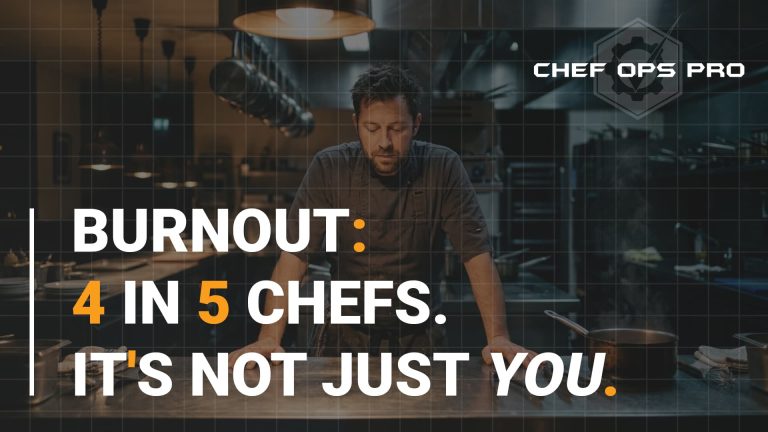

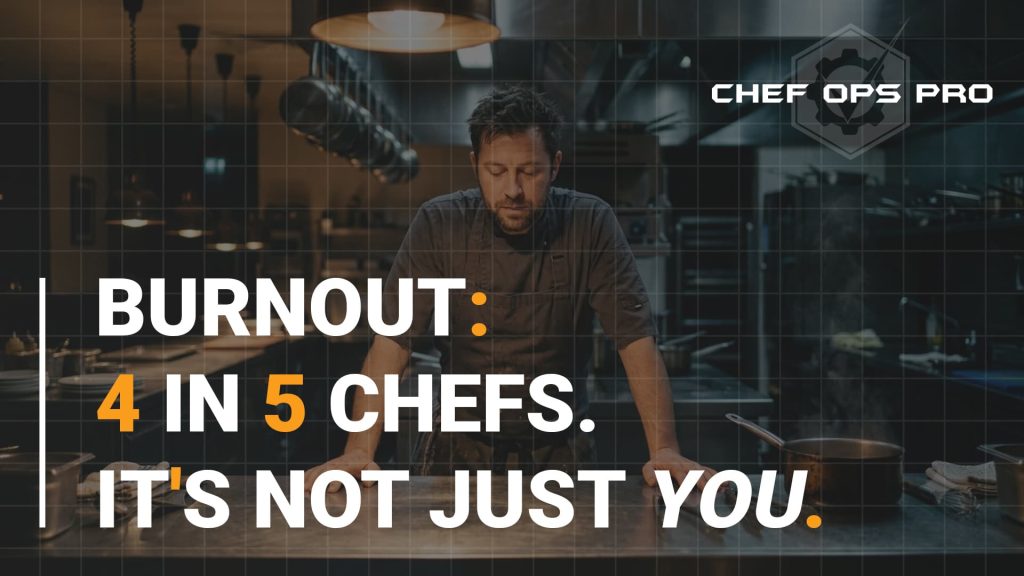
Burnout in professional kitchens isn’t a character flaw or a sign that someone can’t hack it. It’s a predictable, well-documented occupational hazard — the result of prolonged exposure to physical strain, high-stakes pressure, and a culture that has historically treated exhaustion as proof of commitment.
Recognizing burnout as an operational risk, not a personal failing, is the first step toward managing it. Chefs who understand the mechanics of burnout are better equipped to catch it early, in themselves and in their teams, and to build kitchens that perform well over the long term instead of burning through good people.
This is what that looks like in practice.
The Quiet Signs of Kitchen Burnout
Burnout rarely arrives all at once. It builds gradually, and by the time it’s obvious, it’s usually already affecting your judgment, your team, and your food. Watch for:
- Loss of culinary joy. Dishes you used to love creating start to feel like manual labor.
- Cynicism and irritability. Snapping at commis chefs, front-of-house staff, or suppliers over minor issues.
- Decision fatigue. Routine tasks — menu tweaks, shift scheduling — start to feel disproportionately hard.
- Physical toll. Chronic fatigue, poor sleep, and reliance on energy drinks or alcohol to get through the day or wind down after it.
None of these are moral failings. They’re signals — the same way a rising oven temperature or a dull knife is a signal. Ignoring them doesn’t make you tougher; it just delays the reckoning.
This isn’t a fringe issue. The Burnt Chef Project, a UK-based mental health charity built specifically for hospitality, reports that four out of five hospitality professionals experience at least one mental health issue during their career. That number should reframe how the industry talks about this — not as a handful of people who couldn’t cope, but as a working condition most chefs will encounter at some point.
4 Ways to Shift Kitchen Culture and Protect Your Team
1. Normalize the “walk-in reset”
When a line cook is drowning, yelling louder doesn’t speed up service — it just adds noise to an already overloaded system. Give people explicit permission to take 60 seconds outside or in the walk-in to reset their breathing when things get hot. High performance under pressure comes from emotional regulation, not sustained panic. Build this into your training, not just your tolerance.
2. Retire the hero complex
There’s an old saying that if you want something done, give it to a busy person. It holds up because it’s usually true: busy people tend to run tighter systems, waste less time, and have a track record that makes them the safe bet.
What the saying leaves out is the shadow side. Give a busy person too much, for too long, and there’s no slack left for the next fire, the next callout, the next thing that goes sideways mid-service. That’s not a discipline problem catching up with them — it’s arithmetic. And in a kitchen, the person this happens to is usually the chef, precisely because they’re the one everyone trusts to hold it together.
It also tracks with something close to Pareto’s principle: in most kitchens, roughly 80% of the real output — the judgment calls, the problem-solving, the work that actually keeps service standing up — runs through about 20% of the team. Usually that’s the chef and one or two others. It’s not a complaint about the rest of the brigade; it’s just where the load concentrates by default. Left unaddressed, that imbalance is exactly what turns a strength into a liability — the same few people absorb every shock until one of them doesn’t.
“If I don’t do it myself, it won’t get done right” feels like high standards. In practice, it’s the same trap — a bottleneck that runs through one exhausted person instead of a system. Real kitchen leadership means building systems and training people well enough that service runs smoothly whether or not you’re standing over the pass. That’s not a lowering of standards. It’s how standards scale without running the most capable person in the room into the ground.
This is also where the transition from cook to leader tends to break down. The skills that got you promoted — speed, precision, the instinct to just fix it yourself — aren’t the skills the new job actually needs. Learning to delegate, teach, and step back is a different craft, and it’s one most chefs are never taught, only expected to have.
3. Get the admin grind off your plate — literally and figuratively
A significant share of chef stress happens after the food is out: temperature logs, food cost tracking, the rota, compliance paperwork. Doing this on pen and paper after a 12-hour service doesn’t just cost time — it steals recovery time you won’t get back. This is one of the more fixable sources of burnout, because it’s largely a systems problem, not a willpower problem. Chefs who’ve moved logging and scheduling onto something like Chef-Ops-Pro instead of a clipboard tend to describe it less as a new tool and more as getting an hour of their evening back — small on paper, but it adds up over a season.
4. Build real communication channels — and use them
Check in with your brigade during pre-service briefings. Ask how people are doing, and actually listen to the answer. When kitchen leaders treat well-being as a legitimate topic, the team is far more likely to flag problems early — a struggling colleague, a scheduling conflict, a burnout warning sign — instead of letting them build into a crisis or a resignation.
Culture change helps, but it isn’t always enough on its own. Sometimes what’s needed is a conversation with someone outside the kitchen entirely — more on that below.
The Practical Takeaway
None of this requires overhauling your kitchen’s identity or softening its standards. It requires treating burnout the way you’d treat any other operational risk: watch for the early signals, fix the systems that make things worse, and build in recovery as a deliberate practice rather than an afterthought.
The kitchens that last aren’t the ones that push hardest in the short term. They’re the ones that figure out how to sustain high performance without running their most reliable people into the ground.
Need to Talk to Someone?
If you or someone on your team is struggling, you don’t have to sort it out alone or wait until it’s a crisis.

The Burnt Chef Project provides free, confidential mental health support built specifically for the hospitality industry.
- Get help now: theburntchefproject.com/free-mental-health-support
- Learn more: theburntchefproject.com
- Email: [email protected]